
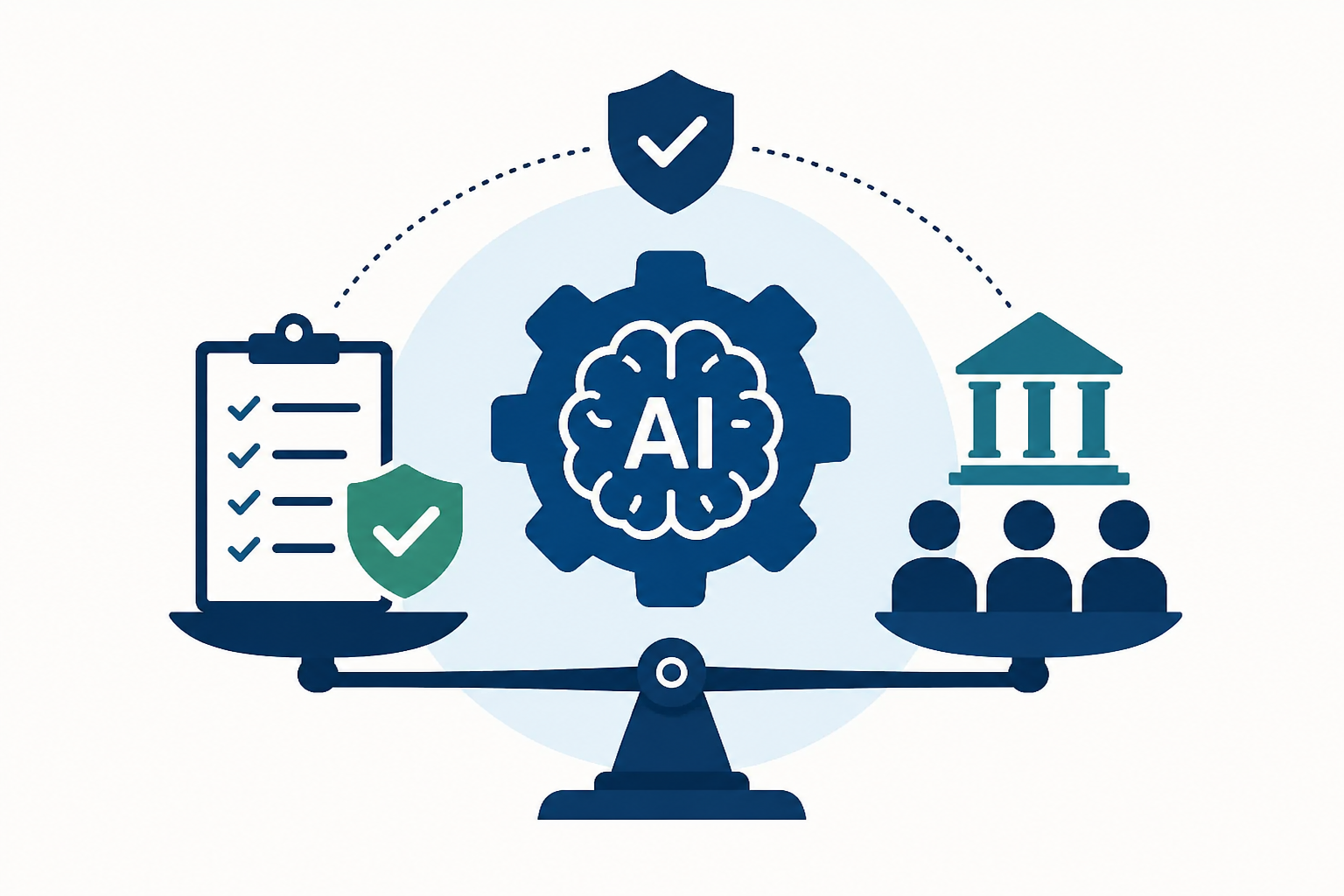
Artificial Intelligence is remodeling the way companies function, innovate, and compete. But despite massive investments in AI technology, many companies war to show promising initiatives into lasting commercial enterprise fee. The project is not often the technology itself. More often, AI projects fail because corporations lack clear possession, accountability, and selection-making systems. Without proper governance, even the maximum advanced AI systems can create confusion, boom hazard, and undermine believe. that is why a hit AI transformation isn’t always just a era adventure—it’s far a governance journey.
When businesses speak about AI transformation, they focus on equipment, fashions, and automation. But the actual bottleneck is nearly continually human — who decides what AI can do, who watches over it, and who’s accountable whilst matters cross incorrect.
This article breaks down why AI transformation is fundamentally a problem of governance, and what you can do about it.
What Does “AI Governance” Actually Mean?
Governance, in simple terms, way having good rules, roles, and duty for the way selections are made.
AI governance is the equal idea implemented to artificial intelligence. It solutions questions like:
- Who approves AI use cases earlier than they cross live?
- Who monitors AI structures after deployment?
- What takes place if an AI model makes a dangerous or biased selection?
- Who owns the statistics the AI is trained on?
- How do you ensure the AI aligns together with your organisation’s values?
With out answers to these questions, AI transformation turns into chaotic — and frequently dangerous.
Why AI Projects Fail: It’s Rarely the Algorithm
Most business leaders assume AI initiatives fail due to technical reasons. In truth, the failure factors are almost usually organizational.
| Common Assumption | Actual Root Cause |
|---|---|
| The model wasn’t accurate enough | No clear success metric was defined upfront |
| The data was too messy | No data ownership or stewardship policy existed |
| The team lacked AI skills | No training or hiring strategy was in place |
| Adoption was low | Employees weren’t involved in the design process |
| Results were biased | No fairness review or audit process existed |
In each case, what’s missing is governance — not smarter algorithms.
The Four Pillars of AI Governance
Getting governance proper calls for constructing on four middle pillars. Suppose of these as the muse your AI method sits on.
1. Accountability
Someone needs to own each AI system. Not a department — a specific person or role.
This means:
- Naming an AI product owner for every deployed model
- Setting up regular review meetings to assess performance
- Creating escalation paths when something goes wrong
Without accountability, all of us assumes a person else is looking the gadget.
2. Transparency
People inside and outside your organization should recognize, at a fundamental level, how your AI makes selections.
This doesn’t mean publishing your source code. It means:
- Documenting what each model does and doesn’t do
- Communicating clearly to users when AI is involved in a decision
- Making it easy for affected parties to ask questions or challenge outcomes
Black-box AI erodes trust — both from customers and from your own employees.
3. Risk Management
Each AI machine includes danger. The governance question is: how plenty hazard is appropriate, and who makes a decision?
Steps to build a risk framework:
- Categorize your AI use cases by impact level (low, medium, excessive chance)
- Set thresholds for when human overview is required
- Audit regularly — not simply at launch, but quarterly or annually
- Plan for failure — what’s the rollback manner if a model underperforms?
4. Compliance and Ethics
AI does not function in a vacuum. It touches privateness, employment, get entry to to offerings, and extra.
Your governance framework needs to address:
- Data privacy laws (GDPR, local regulations)
- Fairness — does the AI treat all groups equitably?
- Consent — do users know their data is being used?
- Industry regulations — healthcare, finance, and education have specific AI rules
Treating compliance as an afterthought almost always results in costly troubles.
Steps to Build an AI Governance Framework
Here’s a practical path to putting governance in place — whether you’re just starting out or trying to fix a broken process.
1: Map Your Existing AI Systems
You can’t govern what you don’t know about. Start by creating an inventory of every AI tool and model your organization currently uses — including third-party tools.
2: Define Your Risk Levels
now not all AI desires the identical stage of oversight. A chatbot answering FAQ questions could be very exclusive from an AI that rankings mortgage applications. Create easy ranges: low, medium, and excessive hazard.
3: Assign Ownership
For each device, assign a named owner who’s accountable for its performance, fairness, and compliance. This character is the first factor of contact if some thing is going incorrect.
4: Write Policies
Create short, readable policies that explain what is and isn’t always allowed when the usage of AI in your organisation. Avoid jargon. Make these on hand to all of us — no longer just the tech group.
5: Create a Review Process
Before any new AI system goes live, it should go through a review. This doesn’t have to be a long bureaucratic process — even a simple checklist helps.
6: Train Your People
Governance fails when most effective a small organization is familiar with it. Run simple AI literacy classes throughout departments. human beings make better selections once they apprehend the technology affecting their work.
7: Monitor and Iterate
Governance isn’t a one-time task. installation normal evaluations. Tune whether or not your AI systems are behaving as anticipated. update your guidelines as the technology and rules evolve.
A Common Mistake: Treating Governance as a Blocker
A few leaders see governance as purple tape — something that slows down innovation.
This is exactly backwards.
Good governance enables faster AI adoption because:
- Teams trust the systems they work with
- Fewer projects get pulled back due to ethical or legal issues
- Employees are more willing to adopt AI tools they understand
- Leaders can make faster decisions when risk is clearly defined
Think of governance not as a gate, but as a guide rail.
Who Should Lead AI Governance?
This varies by corporation size, however a good governance shape normally consists of:
- An executive sponsor (e.g., chief AI Officer or CDO) who owns the strategy
- A cross functional committee with representatives from prison, HR, IT, and operations
- Enterprise unit leads who apprehend the context of every AI software
- An ethics or risk group that evaluations high-effect choices
In smaller organizations, one person may wear many of these hats — but the roles still need to be clearly defined.
FAQs
Q: Is AI governance only relevant for large enterprises?
No. Even small organizations the usage of AI gear for hiring, customer support, or finance need fundamental governance. The dimensions might also differ, however the ideas are the same.
Q: How often should AI systems be audited?
At minimal, once a year. Excessive-chance systems — the ones affecting hiring, lending, health, or felony matters — ought to be reviewed each region.
Q: What’s the difference between AI governance and AI ethics?
Ethics is ready values: what is right and incorrect. Governance is about structure: who decides, who enforces, and how. proper governance puts your moral values into practice.
Q: Do we need a dedicated AI team to implement governance?
No longer necessarily. Governance may be embedded into present roles and strategies. What topics is that responsibilities are clear, not that a new branch exists.
Q: What should we do if an AI system causes harm?
You want a documented incident response plan. This includes immediately pausing the device, figuring out affected events, investigating the foundation motive, and speaking brazenly about what happened and the way you’re fixing it.
Conclusion
AI transformation is not only a technology challenge. it is a governance challenge.
The companies that be triumphant with AI aren’t necessarily those with the most important budgets or the maximum advanced fashions. They are the ones that have constructed the right systems — clean possession, obvious processes, honest hazard control, and ethical guardrails.
While you invest in governance, you are no longer slowing down your AI transformation. You are ensuring it actually works.
Start small. Pick one AI system. Apply the steps above. Then build from there.
That’s how lasting transformation happens.