
Soup has been part of human life for thousands of years. From a simple pot over a fire to today’s high-tech commercial kitchens, the way we make soup has changed dramatically. But what exactly is soup technology, and why does it matter?
In this article, we are able to stroll you via what soup era means, how it works, what tools and strategies are concerned, and how it affects the whole lot from what you devour at home to what you locate on grocery store shelves.
What Is Soup Technology?
Soup technology refers back to the technological know-how, engineering, and food processing techniques used to boom, produce, maintain, and package deal deal soups at each a domestic and commercial scale.
It is not just about cooking. It covers:
- Food chemistry – understanding how ingredients interact under heat
- Processing equipment – industrial blenders, retort systems, and continuous cookers
- Preservation methods – how soup stays fresh for months without spoiling
- Nutritional science – maintaining vitamins and minerals through processing
- Packaging innovation – keeping soup safe, tasty, and convenient
In easy phrases, soup technology is the bridge between a recipe and a product that thousands and thousands of human beings can experience adequately.
A Brief History: From Pot to Production Line
The journey of soup technology began long before factories. Early people boiled bones, herbs, and veggies in clay pots. through the years, this developed into:
- 18th century – Nicolas Appert invented canning, which allowed soups to be stored without refrigeration
- 1897 – Dr. John T. Dorrance condensed soup for Campbell’s, getting rid of water to reduce packaging and shipping fees
- 20th century – Freeze-drying and dehydration made on the spot soups possible
- 20th century – Freeze-drying and dehydration made instant soups possible
- Today – clever processing, AI-based excellent manage, and sustainable packaging are shaping the destiny
Each step become driven via a easy intention: make soup extra accessible, secure, and convenient.
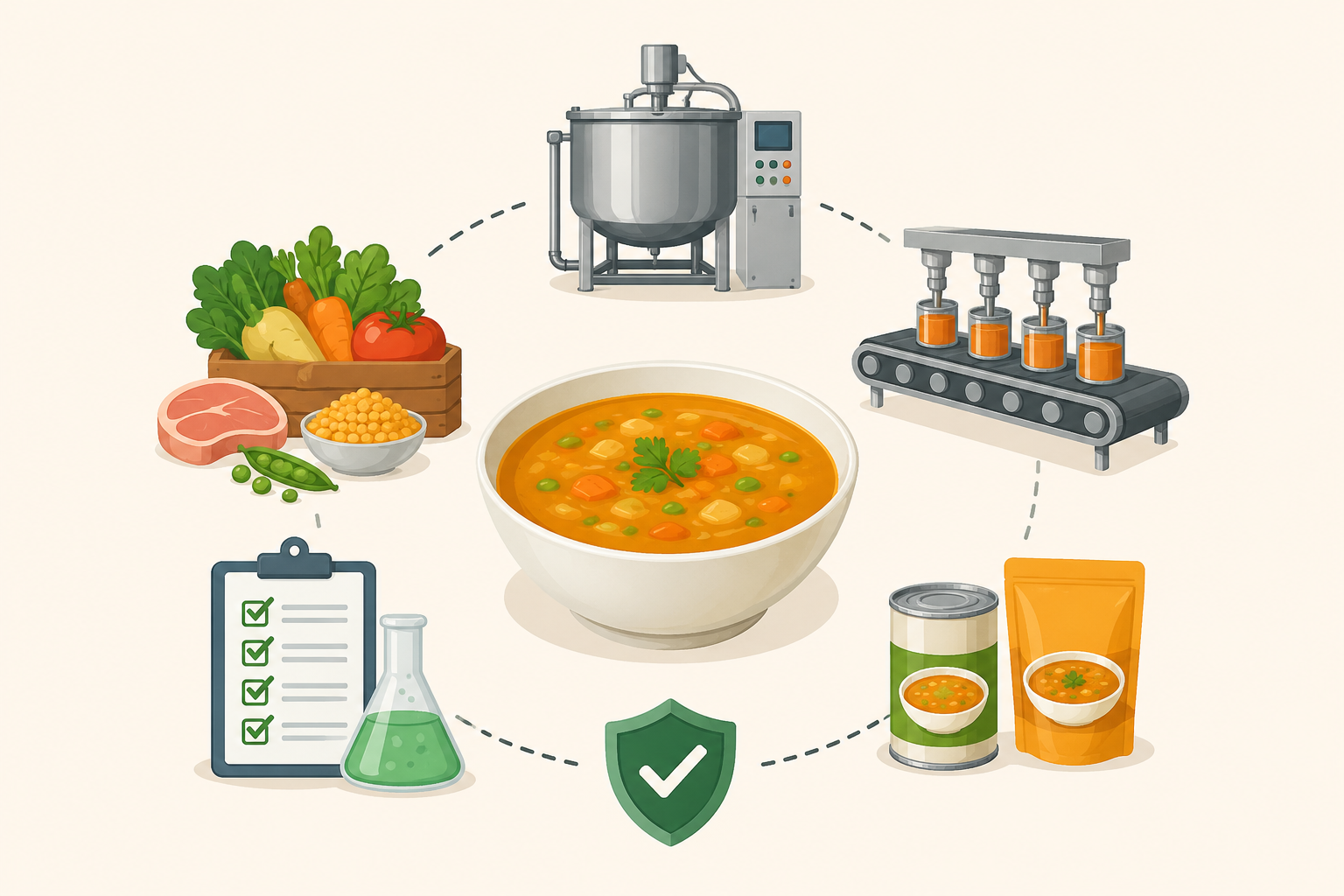
Key Stages in Modern Soup Processing
Understanding how business soup is made enables explain why soup technology is such an important field. Right here are the primary steps:
1. Ingredient Sourcing and Preparation
Raw elements — greens, meats, legumes, spices — are sourced and cleaned. automated washing and sorting machines remove debris and broken objects.
2. Cooking and Blending
Industrial cookers warmth large volumes of soup at unique temperatures. high-shear mixers and commercial blenders create smooth or chunky textures relying at the product.
3. Pasteurization and Sterilization
This is one of the maximum important tiers. warmness treatment kills harmful bacteria without destroying flavor. not unusual techniques are:
- HTST (High-Temperature Short-Time) – heats soup to a high temperature briefly
- UHT (Ultra-High Temperature) – extends shelf life significantly, used for carton soups
4. Filling and Packaging
Soup is filled into cans, cartons, pouches, or cups in a sealed, sterile surroundings. automatic machines ensure constant fill weights and 0 infection.
5. Quality Testing
Samples from every batch are tested in labs for:
- Microbial safety
- pH levels
- Color, texture, and taste consistency
- Nutritional content
6. Storage and Distribution
Completed products go through temperature-managed garage earlier than being shipped to shops global.
Types of Soup Products Enabled by Technology
| Soup Type | Processing Method | Shelf Life |
|---|---|---|
| Canned soup | Retort sterilization | 2–5 years |
| Carton/Tetra Pak soup | UHT processing | 6–12 months |
| Instant soup (powder) | Freeze-drying or spray-drying | 1–3 years |
| Fresh chilled soup | Pasteurization + cold chain | 7–21 days |
| Frozen soup | Blast freezing | 6–18 months |
Each type uses different technology to match customer needs — whether that is convenience, taste, or a longer shelf life.
Innovations Driving Soup Technology Forward
The soup industry is not standing still. Several thrilling trends are reshaping how soup is made and fed on.
High-Pressure Processing (HPP)
HPP uses excessive water strain in preference to warmness to kill micro organism. The result is a brisker-tasting soup with more vitamins preserved — a prime win for fitness-conscious consumers.
Clean Label Formulation
Customers these days need to apprehend every ingredient at the label. Meals scientists now develop soups with fewer synthetic additives, the usage of natural thickeners like starch, and real vegetable purees for color and frame.
AI and Sensor Technology in Quality Control
Cameras and AI structures now experiment each can or carton for defects, seal integrity, and fill ranges. This reduces waste and improves protection with out slowing down manufacturing traces.
Sustainable Packaging
Soup brands are moving away from single-use plastics toward:
- Recyclable cartons made with paper-primarily based substances
- Pouches that use much less fabric than cans
- Biodegradable packaging for green lines
Plant-Based and Functional Soups
Technology is likewise powering the rise of soups enriched with protein, probiotics, collagen, or adaptogens — substances that provide benefits beyond fundamental nutrition.
Soup Technology at Home: What It Means for You
You don’t need a factory to benefit from soup technology. Modern kitchen appliances have brought many of the same ideas home.
- Electric pressure cookers (like immediate Pot) mimic industrial retort cooking
- High speed blenders replicate industrial mixers for smooth textures
- Vacuum sealers assist preserve homemade soup within the freezer longer
- Smart thermometers make certain safe cooking temperatures every time
Even simple choices — like using a stockpot vs. a slow cooker — reflect different heat-transfer technologies that affect flavor and nutrition.
Nutritional Considerations in Soup Processing
One mission in soup technology is keeping nutrients via processing. warmth can damage down nutrients like nutrition C and folate. right here is how the industry manages this:
- Low-temperature, longer-time cooking preserves delicate vitamins
- Aseptic processing fills sterile soup into pre-sterilized containers without high heat exposure
- Vitamin fortification adds nutrients back after processing
- Minimal processing lines reduce the time ingredients spend under heat
Reading labels and choosing soups with quick factor lists and coffee sodium continues to be the best guide for customers.
Frequently Asked Questions
Q1: What does “retort processing” mean in soup technology?
Retort processing involves sealing soup in a can or pouch and then heating it underneath stress to sterilize the contents. It is just like pressure cooking on a huge scale and is what offers canned soups their long shelf life.
Q2: Is canned soup as nutritious as homemade soup?
Canned soup loses some vitamins for the duration of processing, especially warmness-sensitive vitamins. but, it in large part retains minerals and fiber. Homemade soup typically offers a dietary advantage, however consumers can nevertheless make a healthy choice with the aid of choosing great canned options with whole components.
Q3: What is freeze-dried soup and how is it made?
Freeze-dried soup is made through cooking the soup, then freezing it hastily and setting it in a vacuum chamber. The ice turns right away into vapor without passing via liquid, leaving a moderate-weight, shelf-solid powder that rehydrates quick with heat water.
Q4: Why do some soups say “UHT” on the packaging?
UHT stands for extremely-high Temperature. Manufacturers heat the soup to a completely high temperature for a few seconds, which kills all microorganisms. They then package it in sterile cartons, giving it a long shelf existence with out refrigeration until purchasers open it.
Q5: How does high-pressure processing make soup healthier?
HPP uses cold water pressure — not heat — to remove bacteria. Because it does not apply high heat, it preserves more nutrients, natural colors, and fresh flavors, resulting in a product that tastes closer to freshly made soup and retains more of its nutritional value.
Q5:Has new technology helped create plant-based soups?
Yes. Developing plant-based soups that taste rich and satisfying without meat requires food science expertise — especially in building flavor through fermentation, natural extracts, and ingredient layering. Technology plays a key role in getting the texture and taste right.
Conclusion
Soup technology is a ways extra than a gap time period for food engineers. It’s miles the cause you can select up a carton of soup that tastes sparkling, hold canned soup for your pantry for years, or enjoy an on the spot cup everywhere in the international.
From retort sterilization to AI-pushed exceptional tests, from freeze-drying to high-strain processing, the science behind every bowl of soup is wealthy and constantly evolving. As customers call for purifier elements, better vitamins, and greater sustainable packaging, soup generation will continue to upward push to the task.
In next time you open a can or pour warm water into an immediately soup cup, you’ll understand that a world of innovation made that simple second viable.