
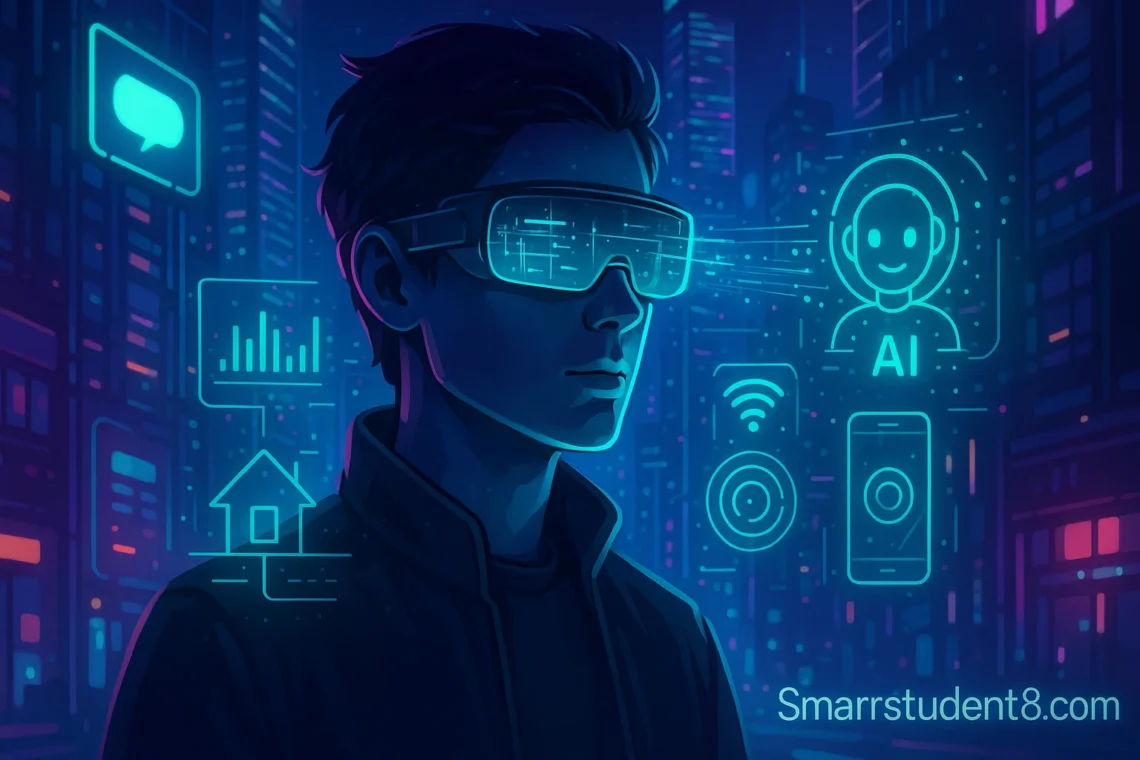
For more than a decade, smartphones were at the center of our virtual lives. They join us to the arena, save our data, and serve as our foremost supply of communication, enjoyment, and productivity. But as innovation keeps to boost up, most important tech giants are looking beyond smartphones and envisioning what the subsequent large technological revolution may look like. From wearable devices and combined truth headsets to AI-powered ecosystems and ambient computing, the future of private era is hastily evolving — and it may change how we live, work, and engage for all time.
In this article, we’ll discover how pinnacle technology agencies are preparing for a global past smartphones, the improvements using this change, and what it approach for clients and industries worldwide.
The Era of Smartphones: A Quick Overview
Earlier than we look beyond, let’s recognize where we stand nowadays. Smartphones revolutionized the arena through combining communication, computing, and leisure in a single pocket-sized device.
Key Milestones in the Smartphone Era
- 2007: Apple released the primary iPhone — redefining mobile computing.
- 2008: Google delivered Android, establishing the door for worldwide smatphone adoption.
- 2010s: 4G networks made streaming, gaming, and cellular apps mainstream.
- 2020s: AI cameras, foldable displays, and 5G connectivity converted cell era.
No matter this achievement, the telephone market has reached a adulthood point. growth is slowing, and innovation is shifting closer to new shape factors and technology that would replace or supplement smartphones. New shape elements and technology that could update or supplement smartphones.
Why Tech Giants Are Looking Beyond Smartphones
TThe pass faraway from smartphones isn’t about changing them at once — it’s approximately growing the subsequent evolution of private generation.
Main Reasons for the Shift
- Marketplace Saturation: Most people already very own a phone. growth ability is restrained.
- Technological Innovation: Advances in AI, AR, and IoT are creating new opportunities.
- Converting person conduct: Human beings need seamless, arms-unfastened, and immersive reports.
- Sustainability concerns: Tech companies purpose to design longer-lasting, ecofriendly devices.
- New revenue Streams: Expanding into wearable tech, AR/VR, and virtual ecosystems brings new business opportunities.
In short, the future lies in connectivity without constant screen interaction — where devices blend naturally into our environment.
The Next Frontier: Life Beyond Smartphones
The arena of era is evolving swiftly, and plenty of tech giants at the moment are imagining a destiny beyond smartphones. For years, smartphones were on the center of our day by day lives, connecting us to statistics, human beings, and the virtual world. However, innovation is transferring towards more immersive, palms-free, and clever technologies that move beyond the limits of handheld devices.
Here’s how the subsequent frontier is shaping up:
- Wearable gadgets: Smartwatches, AR glasses, and fitness-focused wearables are lowering our reliance on phones by performing tasks which includes conversation, health monitoring, and navigation.
- AI and Voice Assistants: Virtual assistants like Siri, Alexa, and Google Assistant are getting smarter, presenting voice-managed solutions and predictive responses without having monitors.
- Augmented & virtual truth (AR/VR): These technology create immersive digital experiences for paintings, learning, and amusement, doubtlessly changing the cellphone as the primary interface.
- Neural Interfaces: Projects like Neuralink aim to connect the human brain immediately with computer systems, allowing manipulate via idea and revolutionizing how we interact with era.
- Internet of Everything (IoE): Clever houses, connected motors, and shrewd towns are making devices talk seamlessly, growing a fully integrated digital environment.
In quick, the destiny past smartphones is about convenience, connection, and intelligence. In place of wearing a single device, people will engage clearly with era embedded of their environment — via voice, vision, and even concept.
How Leading Tech Companies Are Redefining the Future
Let’s see how some of the world’s biggest technology companies are shaping the post-smartphone era.
1.Apple: Building the AR Ecosystem
Apple’s imaginative and prescient is going far past the iPhone. With merchandise like the Apple Watch, AirPods, and the vision pro blended fact headset, Apple is steadily growing a wearable surroundings that may in the future replace smartphones.
Apple’s destiny technologies
- Vision Pro (Mixed Reality Headset): Gives a spatial computing revel in, mixing digital and physical worlds.
- Apple Glasses (Rumored): Lightweight AR glasses that would show messages, navigation, and actual-time information.
- AI Integration Siri and on-device intelligence making Apple’s surroundings greater proactive.
- Health Tech: Apple Watch evolving right into a clinical-grade fitness and health tracker.
Apple’s aim is to move from handheld screens to immersive, wearable, and context-conscious computing. Displays to immersive, wearable, and context-aware computing.
2.Google: From Search to Surrounding Intelligence
Google envisions a global where computing fades into the background — a idea known as ambient computing. In preference to counting on a single tool, generation may be anywhere — in your home, vehicle, or maybe garb.
- Google’s vision beyond Smartphones
- Google Assistant: on the coronary heart of its surroundings, allowing voice and gesture control throughout gadgets.
- Project Iris & AR Glasses: smart eyewear prototypes combining AI, translation, and AR.
- Pixel Ecosystem: Integration throughout phones, watches, tablets, and clever domestic gadgets.
- AI-First Approach: Gemini AI fashions bringing intelligence to every product.
In Google’s global, you gained want to drag out your telephone — the information will discover you automatically.
3. Meta: Building the Metaverse
Meta (formerly Facebook) is placing its all-investment on virtual and augmented reality as the next thing for human interaction. The corporation is investing billions of dollars on developing the Metaverse, a communal virtual universe where individuals are going to work, play, and socialize.
Meta’s Innovations
- Quest VR Headsets: Innovative headsets that allow individuals to step into virtual worlds.
- Ray-Ban Meta Glasses: Augmented glasses, built-in cameras, microphones, and vocal AI.
- AI Avatars: Customizable virtual avatars for meetings, games, and socializing.
- Horizon Worlds: Meta’s virtual worlds for fun, shopping, and community-building.
Meta thinks its next large platform after mobile will be space computing — where virtual life and reality combine. Uiltintegrated huge platform after cell can be spatial computing — where builtintegrated truth and digital life merge.
4. Microsoft: Focusing on Productivity and Mixed Reality
Microsoft’s approach centers on empowering human beings through generation, specially in commercial enterprise and training.
Key initiatives
- HoloLens: A powerful blended-fact headset used in industries, healthcare, and education.
- Copilot & AI Integration: Embedding AI throughout office, windows, and cloud offerings.
- Mesh Platform: permits collaboration in digital areas using avatars and holograms.
Microsoft sees the future as a blend of digital collaboration, AI-powered help, and combined-fact workplaces. As a mix of digital collaboration, AI-powered help, and mixed-fact workplaces.
5. Amazon: The Smart Home Vision
Amazon is constructing a clever ecosystem in which gadgets and offerings work together seamlessly via Alexa, its AI assistant.
Amazon’s publish-phone improvements
- Alexa anywhere: Integrated in audio system, cars, home equipment, and wearables.
- Smart homes: Connected gadgets that research habits and automate obligations.
- AI shopping: Personalized tips and voice-primarily based purchasing.
- Astro robotic: A domestic robot assistant designed to increase Alexa’s attain.
Amazon’s purpose is to make era so herbal which you won’t even note it’s there — it’s going to genuinely expect your desires. Technology so natural that you received’t even notice it’s there — it willintegrated virtually assume your desires.
The Role of Artificial Intelligence (AI)
AI is the core technology powering the future beyond smartphones. It enables personalized, predictive, and context-aware experiences across devices.
How AI Is Transforming the Post-Smartphone World
- Natural Language Processing: Smarter voice assistants that understand emotions and intent.
- Computer Vision: devices that see and interpret surroundings.
- Predictive Analytics: systems that assume user needs earlier than you ask.
- Edge AI: Processing records locally for privacy and velocity.
Essentially, AI will make generation extra human — intuitive, responsive, and invisible.
Challenges in Moving Beyond Smartphones
While the vision sounds exciting, it comes with major challenges.
Key Challenges
- Hardware boundaries: Wearables and AR gadgets still face design, length, and battery constrains.
- Privacy issues: Always-on devices raise serious data security issues.
- Excessive value: advanced headsets and wearables are still pricey for mass adoption.
- Consumer adaptation: People are attached to their phones and may resist drastic change.
- Infrastructure needs: AR, AI, and 6G technology require robust networks and computing strength.
Overcoming these hurdles will determine how soon we truly move into the post-smartphone world.
What It Means for Consumers
The shift beyond smartphones will redefine our courting with generation.
Impact on Daily Life
- Smarter Wearables: Health monitoring, navigation, and communication through glasses or rings.
- Related houses: AI-driven systems meaning lighting, protection, and appliances.
- Wise Environments: Customized stories primarily based on conduct and location.
- Immersive Workspaces: Virtual offices and collaboration via AR/VR.
- Self sufficient Mobility: automobiles functioning as smart gadgets on wheels.
The goal is seamless connectivity — built-in generation built-integrates obviously built-into our builtintegrated.
FAQs
Q1. Will smartphones disappear completely?
No longer every time soon. Smartphones will evolve and coexist with new devices, serving because the significant hub built-in related ecosystems.
Q2. What will replace smartphones in the future?
Probable a mix of AR glasses, wearables, and AI-powered assistants that offer arms-free, immersive interaction.
Q3. Which companies are leading this transition?
Apple, Google, Meta, Microsoft, Amazon, and Samsung are at the forefront of developing post-smartphone technologies.
Q4. When can we expect these technologies to go mainstream?
Specialists builting that by 2030, AR and AI-primarily based devices built-in broadly adopted, replacing many smartphone functions.
Q5. How will this affect consumers?
Users will experience greater convenience, personalization, and connectivity, though privacy and adaptation remain challenges.
Conclusion
The future past smartphones isn’t always a far off dream — it’s already taking shape. As tech giants like Apple, Google, Meta, Microsoft, and Amazon invest heavily integrated AI, AR, wearables, and ambient computing, the follow technological revolution is underway.
In the coming decade, technology will move from our hands to our surroundings — becoming invisible, intelligent, and intuitive. The devices of tomorrow won’t just connect us to the internet; they’ll connect seamlessly with our lives, habits, and environments.
The telephone described the past 15 years. The subsequent era of inovation will define how humans and machines coexist built-in a long time to come.