
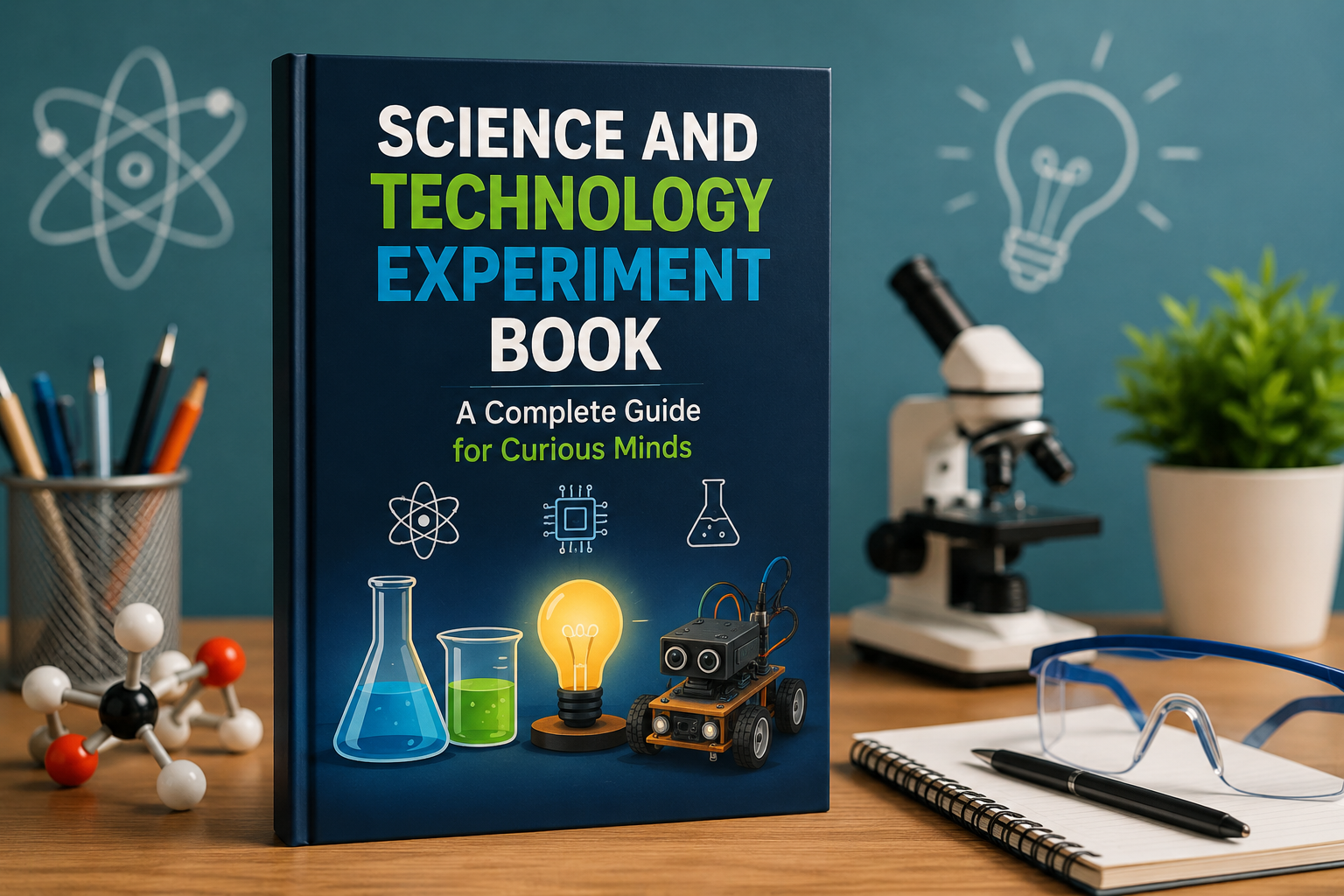
That small moment of wonder is exactly what a good science and technology experiment book is meant to spark. These books turn dry textbook concepts into hands-on activities that kids, students, and even hobbyist adults can actually touch, see, and understand.
In this text, i’ll walk you through what those books provide, the way to pick the right one, and why they still rely in a global complete of YouTube tutorials and apps.
What Is a Science and Technology Experiment Book?
A science and technology experiment e book is a manual packed with realistic, step-by means of-step activities that specify medical and technological ideas through direct experience in preference to just reading idea. Rather than memorizing that “air has pressure,” you build a simple barometer and watch the strain trade along with your very own eyes.
Most of these books cover a mix of:
- Physics experiments (gravity, motion, magnetism, light)
- Chemistry basics (reactions, acids and bases, states of matter)
- Biology activities (plant growth, human body models, microorganisms)
- Basic technology and engineering projects (easy circuits, robotics kits, coding logic)
I have tested a fair range of these books with students for the duration of weekend technology camps, and those that stick with youngsters are constantly those wherein they build some thing themselves, no longer just watch an indication.
Why These Books Still Matter Today
You might wonder why all and sundry desires a physical book when motion pictures exist. right here’s the sincere answer from someone who has run school room technology classes: Movies display you what takes place, but books make you determine out why it takes place.
Benefits of Using an Experiment Book
- Encourages independent thinking – The child has to read instructions, gather materials, and troubleshoot when something doesn’t work.
- Builds patience and precision – Following steps in the correct order teaches discipline that’s useful far beyond science class.
- Improves retention – Research on experiential gaining knowledge of continually show that doing an pastime enables human beings don’t forget principles longer than passive analyzing.
- Affordable and reusable – One e-book can aid dozens of experiments over months or years, not like single-use kits.
- Works without constant internet access – Wonderful for regions with restricted connectivity or for reducing display time.
Key Features to Look for Before Buying
Not every experiment book is created equal. Some are packed with vague instructions and missing diagrams, which can be frustrating for a first-time learner. Based on years of reviewing educational material, here’s what I check before recommending a book.
1. Clear, Numbered Instructions
Good books break every experiment into small, numbered steps rather than long paragraphs. This matters a lot for younger readers who lose focus with dense text.
2. Easily Available Materials
The best books use household items — like baking soda, balloons, batteries, and cardboard — instead of rare lab equipment you’d have to special-order.
3. Safety Notes
Any credible book will clearly mark experiments that involve heat, sharp tools, or chemicals, along with adult supervision warnings.
4. Explanation of the “Why”
An experiment without an explanation is just a magic trick. Trustworthy books always explain the science behind the result in simple language.
5. Age-Appropriate Complexity
A book intended for age eight shouldn’t require algebra, and a ebook for teens shouldn’t feel like a photo book. Matching the reading and skill level is essential.
How to Use a Science and Technology Experiment Book Effectively
Simply owning the book isn’t enough — how you use it decides how much a learner actually gains from it. Here’s a simple process I recommend to parents and teachers:
- Read the whole test first earlier than beginning, so there aren’t any surprises midway via.
- Collect all substances in advance to avoid stopping midway.
- Follow safety commands strictly, in particular for experiments regarding hearth, sharp gadgets, or chemical substances.
- Predict the outcome before doing the experiment — this builds scientific thinking.
- Record observations, even in a simple notebook, to compare prediction versus result.
- Discuss the “why” after the experiment to lock in the concept.
- Repeat with variations — changing one variable (like water temperature) teaches the idea of controlled experiments.
This simple loop of predict → do → observe → explain is the same method professional scientists use, just simplified for learning purposes.
Comparing Types of Science and Technology Experiment Books
Different books serve distinctive purposes. here is a brief contrast that will help you decide which kind fits your needs.
| Type of Book | Best For | Typical Content | Skill Level |
|---|---|---|---|
| Beginner Activity Books | Ages 5–9 | Simple, safe experiments with household items | Basic |
| School Curriculum-Based Books | Ages 10–15 | Experiments aligned with syllabus topics | Intermediate |
| STEM/Technology Project Books | Ages 12+ | Circuits, coding logic, robotics basics | Intermediate to Advanced |
| Advanced Lab Manuals | High school & college | Chemistry, physics lab procedures | Advanced |
| DIY Innovation Books | Hobbyists, makers | Open-ended engineering and invention projects | All levels (self-paced) |
Popular Experiment Categories Explained
Physics-Based Experiments
These usually involve motion, force, and energy — think paper rockets, simple pulleys, or homemade compasses.They may be awesome starting factors because consequences are on the spot and visible.
Chemistry-Based Experiments
Secure versions of chemical reactions, like the classic volcano version or shade-converting liquids using pH indicators, fall right here. Those need closer person supervision.
Biology and Nature Experiments
Developing seeds in extraordinary conditions, watching plant cells underneath a magnifying glass, or constructing a simple terrarium are not unusual examples that teach observation abilities over days or weeks.
Technology and Engineering Projects
That is the quickest-growing category, thanks to the upward thrust of STEM schooling. Simple circuit constructing, primary robotics with kits, and beginner coding good judgment puzzles fall below this phase, making ready inexperienced persons for more superior tech topics later.
Tips for Parents and Teachers
- Start with short experiments (beneath 20 mins) to keep attention spans intact.
- Let the kid fail once earlier than assisting — troubleshooting is a part of the studying.
- Hold a small “test package box” at domestic with fundamentals like batteries, wires, vinegar, and balloons.
- Rotate between physics, chemistry, and technology experiments to hold interest fresh.
- Celebrate small wins; no longer each experiment needs to paintings perfectly the first time.
Common Mistakes to Avoid
- Skipping the explanation step — doing the activity without understanding why defeats the purpose.
- Choosing a book above the learner’s level,which leads to frustration and giving up.
- Ignoring safety warnings, specifically with heat or sharp tools.
- Not keeping a record of results, which makes it harder to build on previous experiments later.
FAQs
Q1: What age is best to start using a science experiment book?
Most youngsters can start easy, supervised experiments from around age five, with complexity growing as they grow older.
Q2: Are these books useful for adults too?
Yes. Many hobbyists and DIY makers use advanced experiment and project books to analyze electronics, coding logic, and even primary robotics.
Q3: Do I need expensive equipment for these experiments?
No. Maximum amateur and intermediate books are designed around household gadgets. handiest superior lab manuals may additionally require specific equipment.
Q4: How is a technology experiment different from a science experiment?
Science experiments commonly test herbal phenomena (like chemical reactions or gravity), at the same time as technology experiments cognizance on building or programming some thing, which includes a easy circuit or a coding challenge.
Q5: Can these books replace a proper science lab or classroom?
Not totally, however they’re an extraordinary supplement. They construct foundational information and interest that makes school room mastering easier to understand.
Conclusion
An amazing science and technology experiment book does more than fill free time — it builds interest, persistence, and actual clinical questioning that lasts nicely beyond formative years. Whether you’re a determine seeking out weekend activities, a teacher making plans a hands-on lesson, or an grownup hobbyist exploring electronics for the primary time, choosing the proper e-book primarily based on ability degree, safety, and clarity makes all the difference.
Begin small, stay regular, and permit each fizzy reaction or blinking LED circuit be a small reminder of ways fun gaining knowledge of by means of doing truly is.