
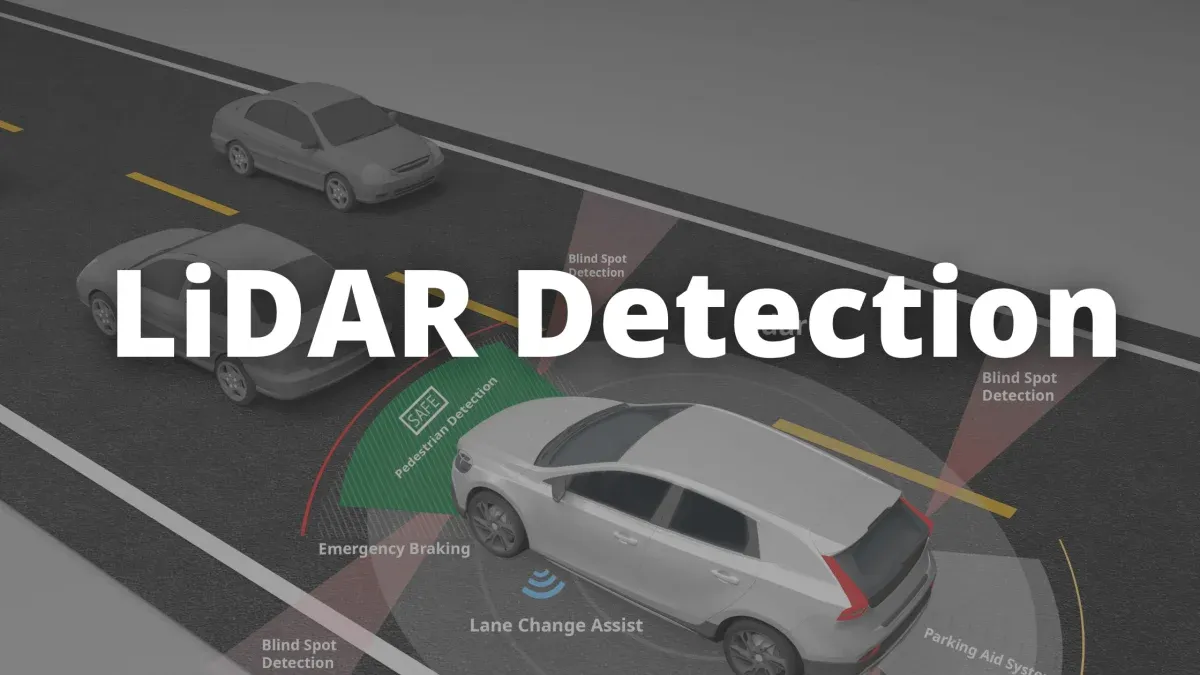
LiDAR technology has become one of the most powerful gear in current mapping, automation, and environmental studies. From self-using vehicles to drones and climate research, LiDAR is reworking how we capture and examine the world. In case you want to recognize what LiDAR is, the way it works, and why it subjects, this detailed article will stroll you through the whole thing in easy, reader-friendly language.
what is LiDAR TeCHNOLOGY?
LiDAR stands for light Detection and ranging. It’s far a faraway-sensing technique that uses laser light to degree distances. With the aid of sending hundreds of laser pulses according to 2d and recording how long each pulse takes to return, LiDAR creates fairly accurate 3-D maps of items, terrains, and environments.
Where LiDAR Is Commonly Used
- Independent cars
- Drones and aerial mapping
- Archaeology
- Creation and surveying
- Forestry and agriculture
- Urban making plans
- Environmental conservation
How LiDAR Technology Works
LiDAR may additionally sound complicated, but the system is straightforward to recognize while broken down into easy steps.
Step-by-Step Working Process
1. Emission of Laser Pulses
A LiDAR tool releases rapid laser beams toward the floor or an item.
2. Reflection of the Laser
The laser hits a floor and bounces again to the sensor.
3. Time-of-Flight Calculation
The system measures how lengthy the laser took to return.
4. Distance Calculation
The usage of the recognized pace of mild, LiDAR calculates the exact distance.
5. Data Collection
Thousands and thousands of factors (called factor clouds) are recorded in some seconds.
6. 3-D Model Generation
Software program converts this statistics into:
- 3-D maps
- Elevation fashions
- Item shapes
- Terrain evaluation
Types of LiDAR Technology
LiDAR structures range based totally on application and scanning path. Here are the maximum commonplace categories.
1. Airborne LiDAR
Established on aircraft or drones, this kind scans huge landscapes from above.
Used For:
- Topographic mapping
- Flood modelling
- Agriculture
- Woodland control
2. Terrestrial LiDAR
Hooked up on floor-based totally systems like tripods or transferring vehicles.
Used For:
- Production sites
- Road surveys
- Constructing modelling
- Archaeology
3. Mobile LiDAR
Connected to automobiles or vans to experiment surroundings while in motion.
Used For:
- Smart city mapping
- Street and highway surveys
- Self reliant riding generation
4. Bathymetric LiDAR
Makes use of inexperienced lasers that penetrate water.
Used For:
- River intensity mapping
- Coastal research
- Marine surveys
Key Components of a LiDAR System
To understand LiDAR higher, let’s take a look at the primary additives.
1. Laser
Sends speedy pulses of mild.
2. Scanner
Controls course and velocity of the laser beams.
3. GPS Receiver
Presents correct vicinity positioning.
4. IMU (Inertial measurement Unit)
Tracks orientation and motion.
5. Processing Software
Converts factor cloud facts into readable maps.
Together, those additives work to create specific and exceedingly accurate 3-D mapping answers.
Applications of LiDAR Technology
LiDAR is used throughout many industries. Right here are a few foremost areas where LiDAR is creating a huge effect.
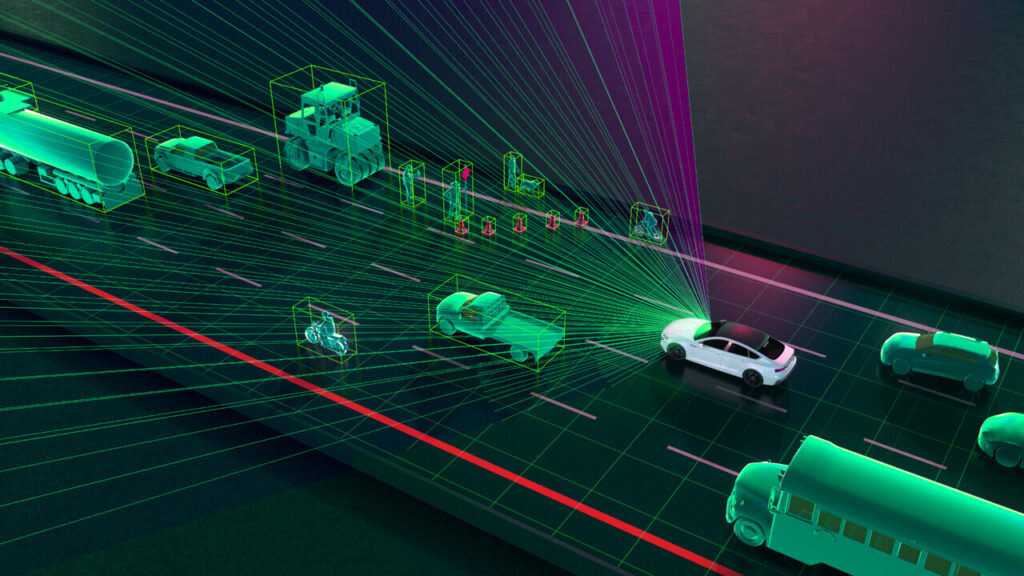
1. Self-Driving Cars
LiDAR helps self reliant motors discover:
- Pedestrians
- Visitors signs
- Close by vehicles
- Street obstacles
It affords real-time three-D awareness for safe riding.
2. Urban Planning and Smart Cities
Town planners use LiDAR to:
- Create 3-D city models
- Improve infrastructure
- Plan utilities
- Manipulate site visitors systems
3. Environmental Monitoring
LiDAR helps researchers:
- Examine weather change
- Measure woodland canopies
- Song erosion
- Analyze coastal modifications
4. Disaster Management
LiDAR is crucial for:
- Flood modelling
- Earthquake impact analysis
- Landslide prediction
- Emergency response planning
5. Agriculture and Forestry
Farmers use LiDAR for:
- Crop fitness tracking
- Soil mapping
- Irrigation making plans
Forestry makes use of consist of:
- Tree top size
- Biomass estimation
6. Construction and Surveying
LiDAR makes construction simpler by means of offering:
- Specific site measurements
- 3-d constructing models
- Development monitoring
- Nice checks
7. Archaeology
LiDAR has determined whole historical cities hidden beneath forests. It could test through vegetation to create clean floor models.
Benefits of LiDAR Technology
Here are the principle blessings of the usage of LiDAR:
1. High Accuracy
Gives particular 3-D measurements even in complex terrains.
2. Fast Data Collection
Hundreds of thousands of surface points accrued in seconds.
3. Works in Low-Light Conditions
Laser technology works both day and night.
4. Penetrates Vegetation
Airborne LiDAR can seize ground facts below bushes.
5. Reduced Human Risk
Surveyors can scan dangerous or unreachable regions appropriately.
Limitations of LiDAR Technology
Despite of its strengths, LiDAR has certain drawbacks.
1. High Initial Cost
LiDAR hardware and software are costly.
2. Limited Performance in Heavy Rain or Fog
Atmospheric interference impacts accuracy.
3. Large Data Storage Requirements
Factor clouds require sizable storage and processing energy.
4. Needs Specialized Skills
Running and studying LiDAR statistics calls for skilled professionals.
Future of LiDAR Technology
The destiny of LiDAR seems especially promising. Good sized improvements are expected in:
1. Autonomous Vehicles
Smaller, inexpensive, and greater powerful LiDAR devices will improve car safety.
2. Drone-Based LiDAR
Lightweight sensors will allow quicker and extra low-priced aerial mapping.
3. Consumer-Level Devices
New smartphones now consist of LiDAR, beginning the door for:
- Home indoors scanning
- VR and AR stories
- Gaming applications
4. Artificial Intelligence Integration
AI will improve:
- Actual-time point cloud evaluation
- Impediment detection
- Automatic choice-making
Overall, LiDAR will hold to play a relevant role in virtual transformation and clever technology.
Step-by-Step Guide: How LiDAR Data Is Processed
Understanding LiDAR statistics processing enables customers recognize what occurs behind the scenes.
1. Data Collection
Sensors gather uncooked point cloud statistics.
2. Noise Filtering
Unwanted factors (like birds or shifting automobiles) are removed.
3. Classification
Factors are labeled as:
- Ground
- Plants
- Buildings
- Water
4. 3D Model Creation
Advanced software program converts labeled statistics into:
- Digital Elevation Models (DEMs)
- 3-D meshes
- Contour maps
5. Final Analysis
Engineers and scientists use the models for planning and research.
LiDAR Software Tools (Popular Options)
Right here are some typically used LiDAR processing software program alternatives:
- LAStools
- Terrasolid
- ArcGIS
- International Mapper
- QGIS (with plugins)
- Pix4D
- CloudCompare
These equipment assist in:
- Eliminating noise
- Enhancing factor clouds
- Producing 3-D fashions
- Visualizing records
PROS and Cons
Pros
- Saves time, reduces labor
- Extraordinarily correct 3D information
- Speedy records collection
- Works in day/night time
Cons
- Sensors are highly-priced
- Mistakes in awful climate
- Requires high processing strength
- Wishes educated operators
FAQs
Q1. What does LiDAR stand for?
LiDAR method light Detection and ranging, a technology that makes use of lasers to degree distances.
Q2. How accurate is LiDAR?
Normally inside some centimeters, depending at the tool and environment.
Q3. Can LiDAR see through trees?
LiDAR can’t see via timber, but it is able to penetrate gaps in plants to map floor degrees.
Q4. Is LiDAR expensive?
Yes, high quality LiDAR structures are luxurious, but expenses are dropping as generation evolves.
Q5. What industries use LiDAR the most?
Important industries consist of:
- Auto mobiles automobiles
- Creation
- City making plans
- Agriculture
- Forestry
- Disaster management
Q6. Why is LiDAR important for self-driving cars?
It gives real-time 3D awareness, supporting automobiles apprehend their surroundings.
Conclusion
LiDAR era has revolutionized the way we map, degree, and understand the world. From engineering and environmental sciences to self-riding automobiles and archaeology, its applications maintain to extend. With its excessive accuracy, speed, and capability to create particular 3-D fashions, LiDAR is turning into an vital device in contemporary industries.
As innovation keeps and charges lower, LiDAR will become even greater available, shaping smarter cities, safer transportation, and better environmental research. Whether you’re a scholar, professional, or tech fanatic, knowledge LiDAR nowadays prepares you for the destiny of digital mapping and automation.